Guernsey Folklore and Forgotten Stories
Welcome To Bonnie Publishing - Why Stories Still Matter
Welcome to The Writing Desk where we do deeper dives into some of the content within our Books and share with you some exclusive content and talk about our forthcoming books
Bonnie Publishing is a space for readers who find meaning in small details, quiet symbols and the worlds that stay with us long after we have turned the final page.
If you feel drawn here, then you are already part of the story.
Welcome to our Blog!
Published: 28th March 2026
By Marie Crowley
Reading Time: 3 minutes
Blog Summary:
An early peak into the creation of our very own Patreon. We have always wanted to build a community for our readers but also to support and grow our own authors. This blog post lays out how we are working towards this over the next few months!
Building a Patreon: Creating a Space for Readers, Writers, and Real Community
There’s something quietly powerful about choosing to build a space that isn’t dictated by algorithms, trends, or fleeting attention spans. Creating a Patreon isn’t just about monetising our work; it’s about intention. It’s about carving out a corner of the internet that feels like OURS, .
For readers and writers of all ages, that kind of space matters more than ever.
Why Patreon?
Platforms come and go in waves of virality. One day spaces to meet are visible; the next, they're buried. Patreon offers something different: stability, ownership, and direct connection.
That shift changes everything.
Creating a Space That Feels Like Home
We are building a Patreon for readers and writers; we are not just offering extra content from the books we write, we are wanting to offer belonging.
what does that mean?
- A place where emerging writers feel safe to share unfinished work
- A space where readers can engage deeply, not just scroll past
- Conversations that go beyond surface-level reactions
- Opportunities for collaboration, feedback, and growth
- storytelling space
- learning platform to learn more about Celtic Paganism
- Supporting families in relearning how to celebrate events such as the Summer Solstice.
This isn’t about perfection. In fact, the magic often comes from the opposite, raw drafts, honest reflections, and the messy middle of the creative process.
People don’t just want polished outcomes. They want to witness creation, and we want to support fledgling authors .
The Importance of Community
Community is often talked about as a “nice to have". It’s not. It’s foundational.
- Writing can be isolating.
- Reading can be solitary.
- But both are inherently human acts; we write to be understood, and we read to feel less alone.
A strong community does three crucial things:
- It sustains creativity
When people are engaging with your work—commenting, responding, sharing their own—it creates momentum. You’re no longer creating in a vacuum. That energy feeds consistency and courage. - It builds accountability
When you know people are showing up for you, it changes how you show up for your work. Not in a pressured way, but in a purposeful one. - It creates shared ownership
Your Patreon stops being your platform and becomes our space. Members begin to shape the culture, the conversations, and even the direction of your content.
That’s where real longevity lives.
Building With Intention
Communities are not built overnight; they build slowly. We want to let our community grow with us rather than trying to pre-build something that feels artificial.
Some simple but meaningful ideas:
- Monthly writing prompts or challenges
- Behind-the-scenes and early access to new books
- Live discussions or casual check-ins
- Member spotlights to celebrate others’ voices
- friday night read with us: bedtime stories
- mentorship
- family ritual space
- home schooling writing sessions.
The Bigger Picture
At its core, building a Patreon like this is an act of resistance.
- Against disposable content.
- Against creative isolation.
- Against the idea that art must be rushed, optimised, and endlessly productive.
We are creating a space where people can read more thoughtfully, write more honestly, and exist more fully.
And that’s not just valuable; it’s necessary.
Because the truth is, people aren’t just looking for content anymore. They’re looking for somewhere to belong.
Published: 9th March 2026
By Marie Crowley
Reading time: 3 minutes
Blog Summary:
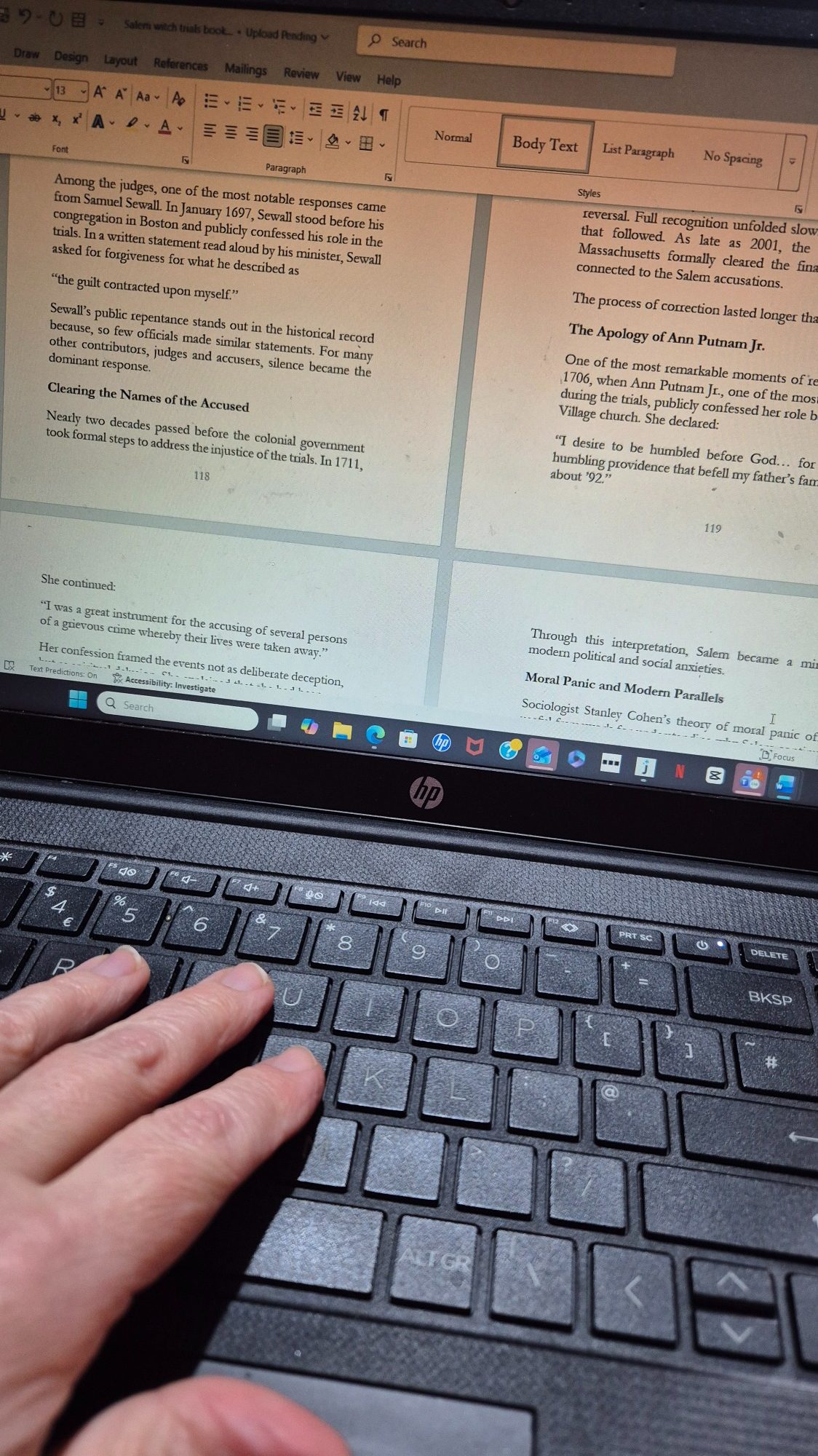
After months of research, travel, and meeting readers, I’m turning my focus back to writing. My next stage involves completing my book on Salem in 1692, developing a family workbook based on Rosie that introduces Celtic Paganism to young children, and opening the first submission window for authors who wish to publish under my imprint.
Moving On: New Books, New Beginnings, and an Open Door for Authors
There are moments in life where things shift quietly.
Not with a dramatic announcement or a sudden change, but with a gentle realisation that the next chapter has already begun. For me, that moment has arrived.
Over the past months I’ve been fortunate enough to spend time sharing my books, meeting readers, and seeing my work find homes in new places. Those experiences are incredibly meaningful to me. Seeing people connect with the stories and history I care about so deeply is something I will never take for granted. Writing has always been the heart of everything I do, and seeing people enjoying the stories has been fantastic.
And now it is time to move forward into the next story(s) that demands to be written.
Returning to Salem, 1692
My immediate focus is completing my next book about the events in Salem in 1692. This particular book is a non-fiction book. This is such an important story, and there is so much that we still need to learn about the power of words and connections.
The Salem trials remain one of the most complex and haunting periods of early American history. They are often simplified into a single narrative about hysteria or superstition, but the reality is far more layered. Behind the accusations and trials were real people navigating fear, power, religion, land disputes, and community tensions.
This book has taken a great deal of research, reflection, and careful writing. I wanted to approach the subject with respect for the people involved and an awareness that these were not just historical figures; they were individuals with families then and now, whose lives were changed forever by the events of that year.
Completing this book feels like an important milestone, and I am looking forward to finally bringing it together.
A Family Workbook from Rosie
Alongside the Salem project, I’ve also begun something quite different. Many of you already know Rosie, whose stories were created to introduce folklore, magic, and nature to younger readers. The response to those books has been wonderful, and it has encouraged me to expand that world a little further.
I am currently developing a Rosie workbook for families with young children, designed as a gentle introduction to Celtic Paganism.
This isn’t about rigid instruction or formal teaching. Instead, the workbook is intended to be something families can explore together. It will include simple activities, reflections, seasonal ideas, and ways for children to connect with nature, folklore, and traditional stories. The aim is to create something welcoming and accessible, something that allows parents and children to learn together and ask questions together. For many families interested in nature-based spirituality, there simply aren’t many resources designed specifically for young children. I hope this workbook will help fill that small gap.
Opening the Door: Our First Imprint Window
Another exciting step forward is the opening of the first submission window for authors who would like to publish under my imprint.
This is something I have been quietly building toward for quite some time.
The imprint was created with a very specific vision: to publish books connected to folklore, witchcraft, sorcery, history, and neurodiversity, while also maintaining an ethical and supportive approach to publishing.
For this first window, I’m inviting writers who feel their work aligns with those themes to apply.
I know how difficult and confusing the publishing world can be, particularly for independent authors or those working in niche subjects. My hope is that this imprint can become a small but meaningful space where thoughtful, unusual, and meaningful work can find its place.
If you’re a writer who has been working on something that fits within those areas, I would love to hear from you.
Applications are now open and will remain open until 30 April 2026.
Thank You for Being Part of This Journey!
None of this would be happening without the readers, families, and supporters who have followed along so far. Whether you discovered my work through the Rosie books, my writing about folklore and history, or through the ongoing Salem research, your support truly means the world.
Now it’s time for the next stage.
- Back to writing.
- Back to research.
- Back to creating new stories and new opportunities.
And I’m very glad you’re here for the journey.
If you’d like to:
- Follow updates on the Salem 1692 book.
- Hear more about the Rosie workbook, or
- Learn about publishing under the Bonnie Publishing imprint.
Please keep an eye on the website and newsletter for updates, or sign up for our newsletter here.
The next chapter is already underway and I can't wait to walk beside you on this journey
Published: 6th March 2026
By Marie Crowley
Reading time: 4 minutes
Blog summary:
A short reflection on a recent week spent in Guernsey — the island that helped shape The Little Witch and the Sea. During my visit I had the joy of seeing the book appear in local shops, meeting readers who had discovered Rosie’s story, and being reminded how deeply place and people influence the stories we tell. It was a week filled with conversations, gratitude, and renewed inspiration for the work still to come.
A Week in Guernsey: Stories Returning to the Place That Inspired Them
Some places have a way of calling you back.
Guernsey is one of those places for me. The island has quietly shaped so much of my writing, particularly The Little Witch and the Sea, and returning there this week felt less like a visit and more like stepping back into a conversation that had never quite ended. There is something about Guernsey that carries the story in the landscape itself. Ancient stones, winding lanes, sea air, and a sense that history has layered itself carefully across generations. When I first began writing the Rosie stories, I knew they needed a place that held that kind of quiet depth, somewhere that felt alive with memory. I am rapidly recognising that the island is my muse. I hear the shouts of history wanting their story written next.
Guernsey offered exactly that.
Seeing the Book Find Its Place
One of the most special moments of the week was seeing the book begin to find its place in local shops. There is something surreal about walking into a shop and seeing a story that once existed only in your mind sitting on a shelf, waiting for someone else to discover it. Writing is such a solitary process that moments like that feel almost dreamlike, the private becoming public, the imagined becoming real.
But even more meaningful than the shelves were the conversations that followed. People stopped to talk about the book, about Rosie, about the island itself. Some shared how much they loved the story. Others spoke about the folklore and ancient history that makes Guernsey so unique. Those conversations reminded me of something I often feel when writing: stories rarely belong to one person alone.
Once they are shared, they become something collective.
The Joy of Meeting Readers
Meeting readers in person is always a humbling experience. Writing happens quietly, often without any real sense of how the story will be received. You spend months — sometimes years — shaping something that exists only between you and the page. Then suddenly someone tells you what they loved, what stayed with them, or which character they connected with. Last week, hearing people talk about the Rosie stories in that way was incredibly moving. It reminded me why stories matter in the first place. Not because they are finished or perfect, but because they create connections between people, places, and ideas that might otherwise never meet.
Those moments of connection are something I will carry with me long after leaving the island and I am humbled by how the people of Guernsey have taken my book under their wing.
A Place That Continues to Inspire
The longer I spend in Guernsey, the more I realise how deeply its history and landscape continue to shape my imagination. The island is filled with echoes of the past: ancient burial sites, stories of seafarers, and traditions that have been quietly passed down through generations. It’s the kind of place where the boundary between history and folklore sometimes feels wonderfully blurred. For a writer, that kind of environment is endlessly inspiring.
Even simple walks along the coast or through the island’s narrow lanes can spark new ideas or reveal unexpected fragments of story. It’s no surprise that Rosie’s world feels so closely tied to this place.
Looking Ahead
As I leave Guernsey, I’m returning home with a renewed sense of purpose. The next stage of writing awaits: finishing my Salem book and beginning something that has been quietly forming in the background for some time, a story centred around Gran Mère and a family resource on Celtic Paganism.
Anyone who has read The Little Witch and the Sea will know that Gran Mère carries a certain presence within the story. There is depth there, a history that deserves to be explored more fully. In many ways, that story has been waiting patiently for its moment.
Now it feels like the right time to begin.
Gratitude
Before leaving the island, I find myself feeling deeply grateful.
- Grateful for the conversations.
- Grateful for the encouragement.
- Grateful for the kindness shown by people who took a moment to stop, talk, and share their enthusiasm for the book.
Writing may begin in solitude, but it grows through the connections it creates with others.
Guernsey reminded me of that this week.
And for that, I’m very thankful.
Published: 18th February 2026
By Marie
Reading time: 3 minutes
Blog Summary: Folklore continues to shape how we understand storytelling, nature and cultural heritage today. This article explores why traditional stories still matter, how they connect us to the land, and why nature-based storytelling resonates so strongly with children. Reflecting on the role of myth, imagination and place, it also shares how these ideas influence the ethos behind Bonnie Publishing and the creation of stories that invite curiosity, connection and creativity.
Why Folklore Still Matters Today
Folklore has never truly disappeared — it has simply changed shape.
In a world driven by technology and constant noise, I often find myself returning to older stories. Stories rooted in landscape, myth and memory. Stories that connect us not just to imagination, but to place. Folklore still matters today because it reminds us that storytelling is one of the oldest ways we make sense of the world.
Folklore and Our Connection to the Land
Across cultures, traditional folklore grew from the land itself. Coastal communities told stories shaped by the sea. Farming communities created myths tied to harvest cycles and seasonal change. Hills, rivers and ancient stones became characters in their own right. These stories were not separate from daily life — they were woven into it.
When we explore folklore now, we reconnect with something grounding: the idea that landscape holds memory. Not in a mystical sense, but in a cultural one. The land shapes the story, and the story shapes how we understand where we belong. This connection between folklore and place is central to my own creative work.
Why Folklore Speaks So Strongly to Children
Children naturally understand symbolic storytelling. They do not need everything explained in literal terms. A goddess figure, a whispering sea, a protective spirit — these become ways to explore bravery, kindness, change and responsibility. Folklore allows children to approach complex ideas safely. Through story, they can encounter uncertainty, growth and courage without being overwhelmed by instruction.
This is why nature-based storytelling continues to shape children’s books today. It provides depth without heaviness. Imagination without fear.
Storytelling as Cultural Memory
One of the reasons folklore still matters is because it preserves cultural memory. Long before books were printed, stories were spoken aloud. They were passed from generation to generation, evolving slightly each time.
That evolution is important.
Folklore is not fixed. It adapts. It reflects the values, challenges and questions of each era. In that way, it remains alive. When we retell traditional themes in modern children’s literature, we are not copying the past—we are continuing a conversation.
Why This Matters to Me
When I began writing, I realised that I was drawn repeatedly to stories shaped by land, history and imagination. I wasn’t interested in preaching belief systems or recreating rigid mythology. I was interested in atmosphere. In symbolism. In gentle exploration. For me, storytelling is not about telling children what to think. It is about inviting them to notice.
To notice the sea.
To notice stones and trees.
To notice feelings.
Folklore provides a framework for that noticing. Through books like The Little Witch and the Sea, I aim to blend mythic inspiration with emotional warmth — creating stories that feel timeless but accessible, rooted but imaginative.
Why Folklore Still Matters Today
Folklore matters because it slows us down. It reminds us that imagination and nature are not separate from learning. That stories can educate without instructing. That history can be explored through creativity. In a time when everything feels immediate, folklore offers something steady, and perhaps that is why it endures.
Storytelling, Ancestors and Shared Memory
Long before stories were written down, they were carried through voices — shared around fires, passed between generations and shaped by the lived experiences of those who came before us. In many ways, storytelling is one of the oldest connections we have to our ancestors. Stories allowed people to remember where they had come from, what they had learned and how they understood the world. Through myth, legend and everyday tales, knowledge was preserved not only as information, but as feeling — a way of holding identity, belonging and cultural memory.
When we read or tell stories rooted in folklore today, we are participating in that long tradition. Even when stories change or evolve, they carry echoes of those who once told them. This does not mean we recreate the past exactly, but rather that we honour the idea that storytelling connects generations through shared imagination.
For me, this connection to ancestral storytelling is less about looking backwards and more about recognising continuity. Stories help us feel part of something larger — a thread that links past voices to present creativity. Through storytelling, we are both listeners and storytellers, inheriting narratives while also reshaping them for the future.
Welcome To Bonnie Publishing - Why Stories Still Matter
Published: 7th February 2026
By Marie
Reading time: 4 minutes
Blog Summary: Bonnie Publishing was created from a love of history, folklore, and the human stories hidden beneath them. This blog explores why storytelling still matters and what readers can expect from this journey.
Stories have never felt like just stories to me.
They have always felt like echoes — fragments of something lived, something felt, something almost forgotten but still reaching forward through time. Long before Bonnie Publishing existed as a name, there was simply a quiet fascination with the human experiences hidden behind history, myth, and memory. This blog is not just an introduction. It is the beginning of a conversation.
Who I Am — And How Stories Found Me
I did not arrive at publishing via a straight path. Like many journeys shaped by curiosity, it grew slowly, through moments of discovery rather than a single decision. History, folklore, and place have always felt deeply connected to identity — not as distant academic subjects, but as living narratives that continue to shape how we see the world today.
The stories that stay with me are rarely the loudest or most celebrated. Instead, they are the quieter ones: the overlooked voices, the human costs hidden behind dramatic events, and the emotional truths that often disappear when history is simplified into facts alone. Over time, writing became a way of exploring those spaces — asking questions rather than providing easy answers.
Why I Write
Writing allows me to explore the spaces between certainty and uncertainty. Much of history, especially when tied to myth or collective fear, reveals as much about human nature as it does about the past itself. Whether examining witch trials, folklore, or cultural identity, I am drawn to the moments where emotion and belief collide — where stories become mirrors reflecting our deepest fears, hopes, and misunderstandings. Bonnie Publishing exists because these stories matter. Not simply as entertainment, but as tools for reflection and learning.
Stories as Connection
If you have ever felt drawn to the quiet edges of history or sensed that familiar stories carry hidden layers beneath the surface, then you are already part of this journey. This space is for readers who enjoy curiosity over certainty, reflection over noise, and storytelling that invites thought rather than simply delivering answers. Here, history is not static — it is something to sit with, question, and experience.
What Bonnie Publishing Stands For
My first book, I initially published on Amazon, but it didn't sit right; they didn't reflect my own values, so I decided in 2025 that Bonnie Publishing would be born. Named after my firstborn grandchild, it is rooted in independent storytelling. It is a place where history, folklore, and human experience intersect — where narratives are allowed to be complex, emotional, and meaningful.
The goal is simple: To create stories and learning experiences that encourage deeper thinking, emotional engagement, and connection with both past and present.
What You Can Expect From The Writer's Desk
Future posts will explore:
- The hidden human stories behind historical events
- Folklore and myth examined through a thoughtful lens
- Reflections on writing, research, and storytelling
- Educational insights designed to inspire curiosity
- Personal perspectives on place, identity, and memory
Each post will aim to open a door for you—whether into history, imagination, or reflection - I want to create a community. For you, the reader, let's go on this journey together
This Is Only The Beginning of a Conversation
Publishing is often described as sharing a finished product. But for me, it feels more like opening a space where ideas can continue to grow. If you have arrived here, you are already part of that process. I am here to help other indie authors who have a book inside their head but unsure how to get it onto paper
Welcome to Bonnie Publishing!
Frequently Asked Questions
A selection of our most commonly asked questions
Q. Are Witches Real?
A. Witches live in stories, myths and history, helping us explore mystery and imagination. Today, some people call themselves witches as part of their beliefs or traditions, often connected to nature or spirituality. This doesn’t mean they have magical powers like in fairy tales — it’s simply another way people express their identity and culture.